Insights
Engineering
When AI writes faster, the review queue becomes the product
Anthropic’s source-control rebuild exposes a practical bottleneck: how quickly your team can accept a change, prove it works, and recover when it doesn’t.
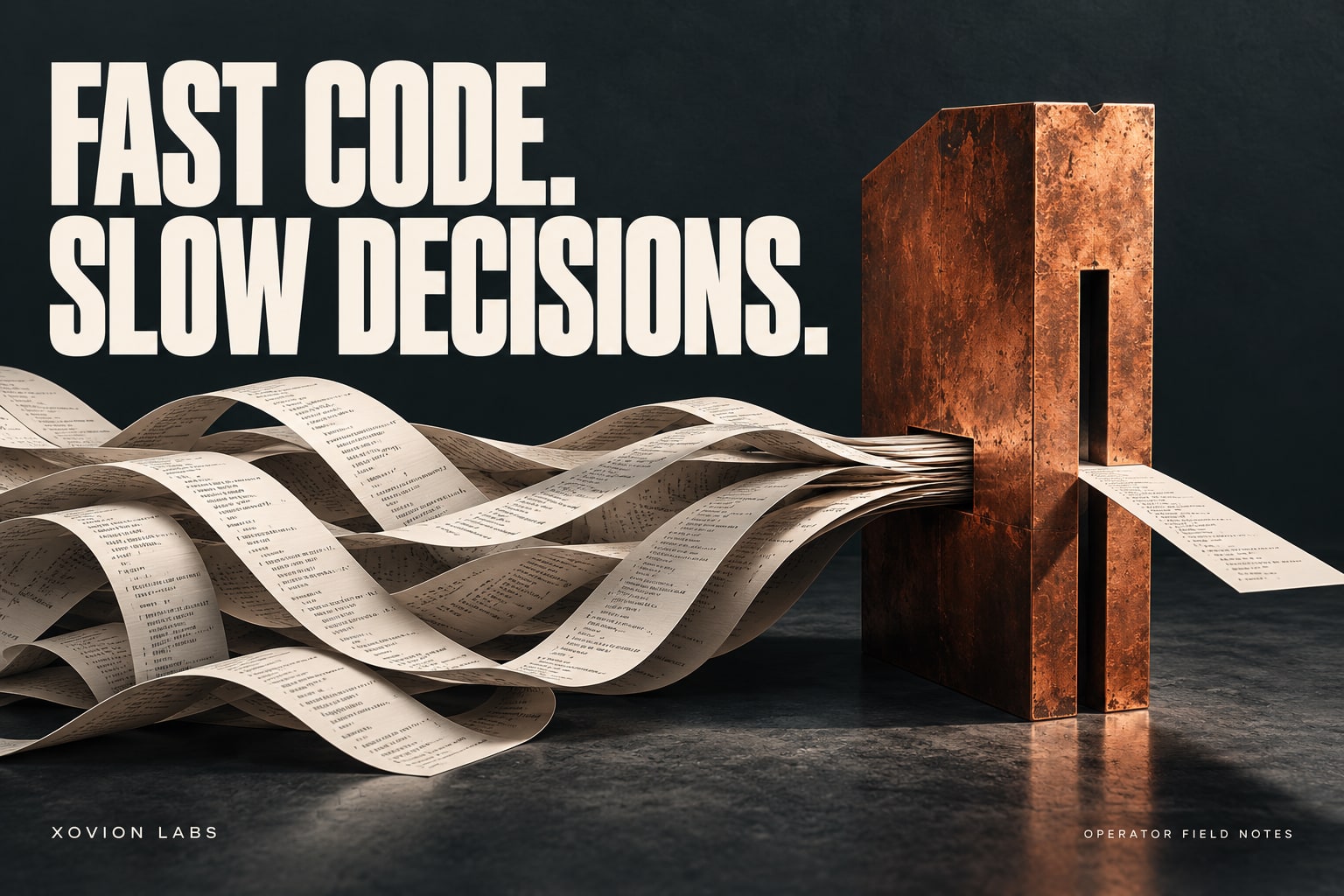
The agent finishes a feature before lunch. By the next morning, three more changes are waiting. The code is arriving faster, but nobody can quickly explain which version is safe to release.
That is an operating problem worth measuring. The useful unit is an accepted change: someone understands the behavior, the evidence supports it, and the team knows how to undo it. Counting generated files misses most of that work.
What changed
In an October 13 engineering post, updated October 15, Anthropic described replacing Git for its internal monorepo with a system called Scion. It reports moving from roughly 2,500 merged changes a day in May to more than 30,000 in September.
Those are Anthropic’s own figures, from an unusually large internal workload. The post describes an internal migration, not a generally available tool your team can adopt. Its scale does not establish that a small business should replace Git.
Our read: faster production of code makes the surrounding decisions more visible. The most useful response is to find where your changes wait.
Find the waiting room
Consider a hypothetical service business adding a booking request form. The first version saves the request. A second change improves the confirmation screen. A third introduces retries.
Reviewing each change as “looks fine” can miss the shared question: what happens if a customer submits twice while the booking system is slow?
The acceptance decision needs the complete behavior. A polished confirmation screen should not imply that a booking exists when the only verified outcome is a saved request.
Write the expected outcome before reviewing the implementation. For this example: “One request is saved, retries do not create duplicates, and the customer sees the status the system can actually confirm.”
Now the team has something concrete to inspect.
Make the decision small enough to finish
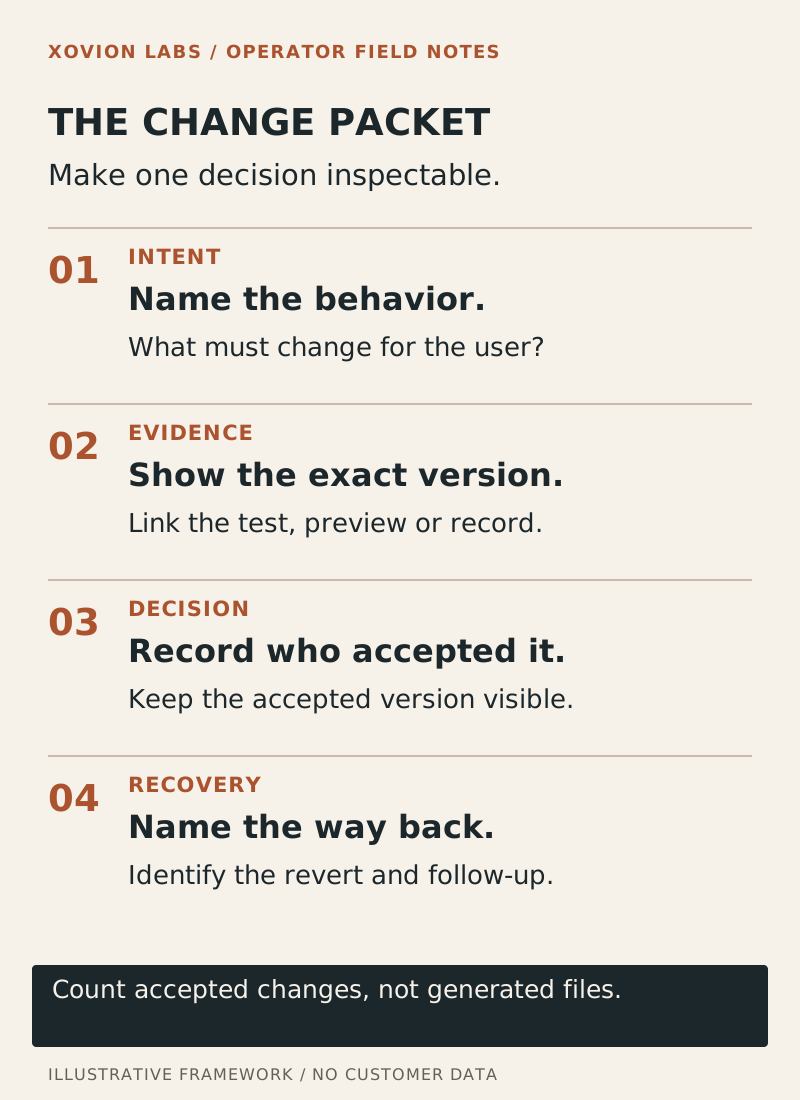
A useful change packet contains four things:
- Intent: the customer or operator behavior that should change.
- Evidence: the actual test, preview, or saved record supporting that behavior.
- Decision: who accepted the change, and which version they accepted.
- Recovery: the change to revert and any records that need follow-up.
This can live in a short pull-request description. It does not require another project-management system.
For the booking form, evidence should include a normal request, a repeated submission, and a failed downstream connection. A reviewer should be able to locate those results without reconstructing the entire development conversation.
Keep the packet proportionate. A typo fix needs much less ceremony than a change that creates customer records.
Run a five-change audit
This is a proposed exercise, not a Xovion benchmark. Take the last five meaningful changes your team accepted. Record when each was ready for review, when it was accepted, and when its behavior was confirmed after release.
Then ask:
- Could the reviewer identify the intended behavior immediately?
- Did the evidence belong to the version that shipped?
- Was time spent checking behavior, or hunting for context?
- Could someone else identify the recovery step?
Use median review waiting time and the count of changes with complete evidence as your baseline. Repeat after using the short packet for the next five changes.
A worthwhile result is less time reconstructing context without more escaped defects. Faster approval alone is not enough; track corrections and reversions alongside it.
Keep the lesson at your scale
Anthropic’s infrastructure choices address its own workload. Buying a new source-control tool will not automatically resolve an unclear release decision.
If one person builds and reviews the system, the same packet is still useful. It gives tomorrow’s operator a record of what today’s builder accepted. If the change is low impact, keep that record correspondingly short.
The next move is straightforward: open the oldest change waiting for review and write the behavior it must prove in one sentence. If that sentence is difficult, more generated code is unlikely to clear the queue.
Continue with A Passing Test Is Not Production Proof for the difference between a successful check and a verified release.
Source and scope
Anthropic: Redesigning source control, published October 13, 2026; updated October 15. Product claims are attributed to Anthropic. The booking example and audit are illustrative recommendations; no Xovion performance result is claimed.