Insights
Operations
Can you restore the system you just decided to own?
Source code and a backup are a starting point. A witnessed recovery test shows whether the business can resume the work.

You have the source code. You have a database backup. The machine stops working on a busy morning.
Can someone else bring the system back?
That is a more useful ownership question than whether the application runs on your hardware. A system you can recover has more practical value than a system you merely possess.
More places to run still means somewhere to operate
On October 9, the Deno team announced it was joining Cloudflare. The stated goal includes making Workers and Durable Objects easier to host outside Cloudflare’s network. The announcement discusses combining work on workerd and celld.
That is a direction of work, not proof that your application can move unchanged today. Dependencies, state, deployment configuration, and operational support still need inspection.
For a business considering software it owns or hosts itself, the announcement makes a useful question timely: what exactly would you need to restore somewhere else?
The backup is only one ingredient
Imagine a hypothetical service company’s dispatch board. The application lists open requests, assigns work, and sends updates to staff. Its owner keeps a copy of the database and assumes that covers recovery.
A usable restore may also need the correct application version, a compatible database structure, configuration, access to authorized credentials, file attachments, and instructions for starting background jobs. Some integrations may require reconnecting or changing a callback address.
Write those dependencies down before the outage. Store secrets in the approved credential system; the recovery guide should explain how an authorized operator obtains them, without copying them into the document.
Then identify the business boundary. Is recovery complete when the login page loads, when current requests appear, or when the team can safely assign the next job?
Those are different finish lines.
Restore into a place that cannot send
The first recovery exercise should use a separate environment with outbound messages, billing actions, and live integrations disabled or replaced with test destinations.
Why? A restored background queue might contain work that was already completed in the original environment. Starting it blindly could repeat a notification or another external action. Decide how completed, pending, and uncertain work will be handled before restarting workers.
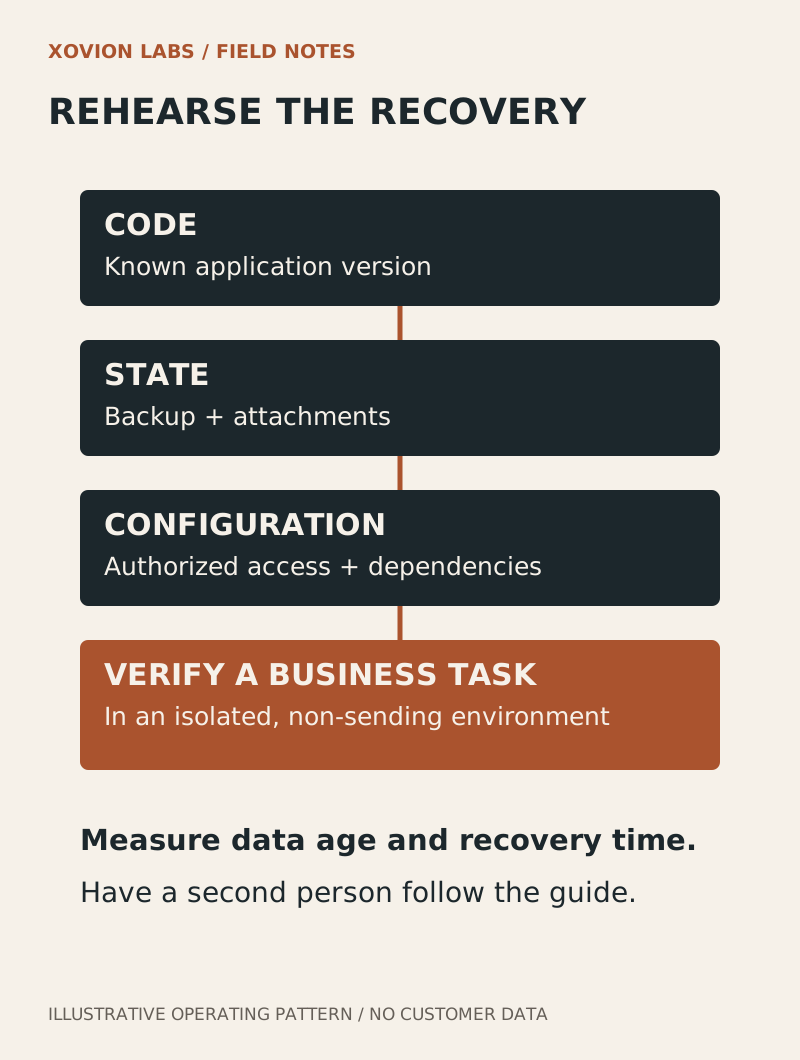
Choose a recent backup that your retention rules permit you to use. Have someone other than the original builder follow the guide. Record where they need an undocumented explanation, an unavailable permission, or a missing file.
Do not erase those interruptions from the result. They are the point of the exercise.
Measure the gap you discover
Record two things: the age of the recovered data and the time until the agreed business task works. The first describes what work might need reconstruction. The second describes how long operations might need a fallback.
Set acceptable limits with the people who run the process. A reference library and a live dispatch queue do not need identical recovery promises.
Verify something beyond page rendering. Open a known synthetic request, change its assignment, restart the test service, and confirm the saved state remains correct. Check that no real message left the restored environment.
This is a proposed exercise, not a guarantee that a successful rehearsal covers every outage. Repeat it when important dependencies change, and preserve a manual operating path for the period when the software is unavailable.
Ownership needs a second person
If only one builder knows where the configuration lives, the company still has a person-shaped dependency.
The next useful improvement may be a short recovery guide and a witnessed restore, even if you keep the application on its current hosting provider. Portability becomes credible when a second person can demonstrate it within the boundary you agreed.
For the separate question of where information travels, see Open weights do not tell you where your business data goes. Recovery asks whether you can resume the work after a dependency disappears.
Source and scope
Deno is joining Cloudflare, October 9, 2026. The self-hosting direction is attributed to the announcement; no migration compatibility is asserted. The dispatch example and recovery exercise are illustrative operational recommendations.